
Instructor

David Pinto
Experiential Learner Specialising in Metacognitive and Social Learning.
Taster Session – How L3ssons work!
How to get the most out of l3ssons, from learning quickly through sharing and becoming a teacher.
£10
Community Coaching
How to cultivate a thriving community, for on-the-ground intentional communities and people in networks and organisations.
£450
Sqale Coaching
Using the tool of Sqale to utilise the Power Usecases of Virality, Social Neuron and so on.
£300
Open Business Practices
Detailing the Open Business Practices of Content Trifecta and Open Meetings and so on.
£600
Birthing Ecosquared
An alternative economics based on money as a vector, and scalar as subjective enumeration: Ecological Economics or Ecosquared.
£450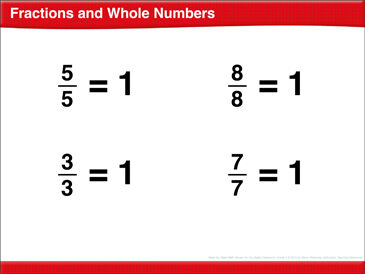
Whole Fraction
Using three methods (factors and muliples, unitary multiplier, algebra) on any FDP question; translating any FDP question into an equivalent fraction.
£90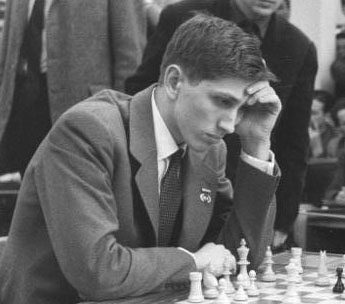
Chess
In this course, the beginner chess players will learn about three emergent forms: the fork, the revealed attack, and simultaneous offence.
£90
GO Game
This introduction to the game provides heuristics for good shape and influence, stabilising a mid-level play, and inviting an open game.
£90
TEFL
Learning a language through immersion in pronunciation, question-answer transform, and verb-tense map.
£150
Accelerated Learning
By improving quality of attention, visual or audio-wise, being receptive to simultaneous learning, and externalising creates a secure learning process within the learner.
£180
Literature
Covering the construction of language, grammar, roots in latin and greek and germanic language; bringing a sensitivity to inner thought and feeling; mproving vocabulary through discovery of exciting and engaging reading material; reducing critical through enabling fluidity of expression in the pursuit of completing a narrative or argument; through xploration of texts including Shakespeare, realising their powerful structure, and employing them in writing.
£90
Wording
Exploring the methods of appreciating another's reality, non-invasive therapeutic techniques, judicial interruption, intervention and transformation, and empty listening; borrowing heavily from NLP and cognitive science.
£180
Classroom Coaching
The course can be delivered to individual teachers who wish to trial the tool, or to whole departments or schools. Evidence derived from student behaviour and teacher feedback, will inform academic publication to support improvement in behaviour and potentially attainment.
£300
XQ_Solution
Combining Euler's Identity or Formula, temporal understanding of Bayes Theorem, and Roots of Unity as the social dimensionality of the moment.
£900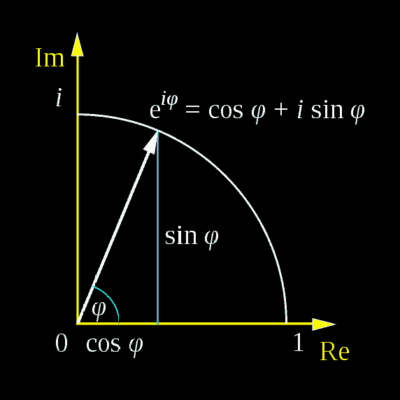
XQ_Plus
More in-depth exploration of XQ covering interpretations of the five stages of mathematics: counting, arithmetic, algebra, calculus and iteration, and application in education, therapy and economics.
£300
XQ_Simple
Introduction to the intuitive side of maths, where maths is the model with potential application in education, therapy, social cohesion and AI.
£150
Mirror Mosaic
Introduction to techniques of writing and reading, sharing, crowd-sourcing fellow readers, editors and writers, collaborating on fresh, vibrant living texts.
£300
Social Innovation Coaching
Activities to improve social cohesion. Less social engineering and more social art, where we are the medium which is mutually manipulated for our individual and collective pleasure.
£90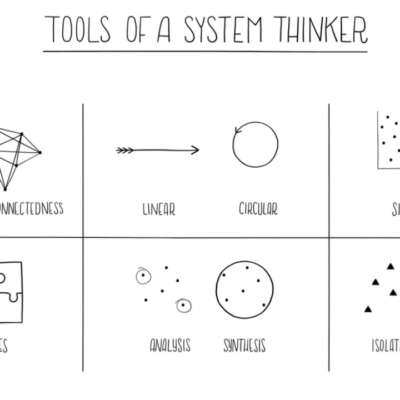
Strateg_OS
Introduction to the mindset to cultivate which enable higher quality interaction, and tools towards achieving social cohesion.
£300
Collective_Unity
Learning to living within limits of self, the interface with others, and within the social field, while embodying peace within trying circumstances. It's a long-haul journey, and requires temperance.
£450
Wisdom 101
Participants will be able to replenish resources and establish balance outwith human contact eg with nature, while improving communication with others, adolescents, children and babies, as well as animals.
£300
Meditation
You will learn deeper techniques on how to quieten the mind, through hard wall-sitting or soft responsive awareness.
£150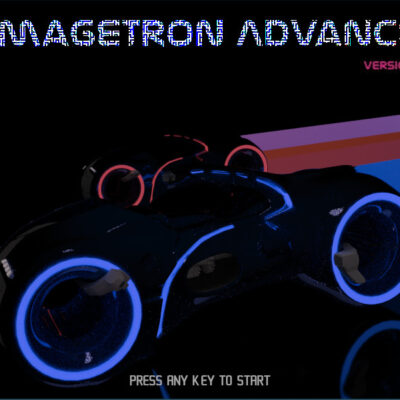
Tron School
Learn the teamwork for how to grind at the launch, the basic positions, overal strategy and some close tactics of the online game Armagetron Advanced.
£90
Buddhism Basics
The objective is to provide an introduction to Buddhism to beginners, to people who have experienced mindfulness shorn of its cultural roots, and for experienced practitioners with the hope that bridges can be made to make mindfulness practices take more root in western culture.
£90
Our Children
Techniques are shared on how to improve relations with adolescents, children and babies, from simple techniques to get one's baby to sleep, to engaging the living enthusiasm of children, to providing a clear and practical framework for adolescents to accept the responsibility of their actions with other people.
£300
Intimacy Coaching
The lessons explore the experiential condition of sex, distinguishing sexual from sensual, active and passive within mutual action, the gift of giving pleasure, the energy which supports gentle to carnal with a kiss, caresses or copulation; the more subtle energies of bodily aesthetic, emotional engagement between people, and spiritual union; and the practices which generate love between people and preparation for increasing the potential of making love. Optional lesson on more risky forms of sexual congress, power-games, imaginative roleplay, the dangers of addiction to sex and porn and how to shift from addiction to sex or pornography.
£600
Sustainable Relational Depth
Lessons cover the experience of falling in love, the deep acceptance of other, four kinds of relational love (first love, mature, spiritual, intentional), the conditions to set up an unconditional, fully trusting relationship with other; about the drives which we experience and how we maintain our relationship; and establishing new social contracts within a world with deteriorating family ties, increased atomisation of social relations, and how to create stable conditions for the rearing of children. An optional lesson offers advice on dealing with relationships which go wrong, emotional abuse and how to part well.
£300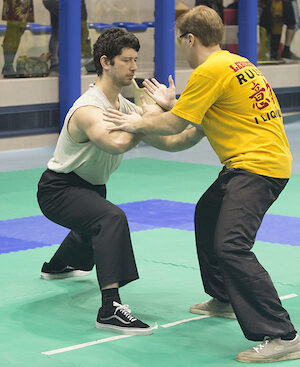
Tai-Chi (Martial Art)
This is for people who have experienced Tai-Chi and seek a way of applying it at battle-speed and in situ. The strategy for developing the correct mentality without collapsing to greater strength or faster response times. This is an invitation.
£300
Tai-Chi Dynamic
This course is for people who have experienced some Tai-Chi and have some reasonable confidence in their physical co-ordination. Techniques are designed to bring inherent detail to whatever move they know, a dynamic analysis of push hand forms, and improvisation of movement informed by Tai-Chi movement, with an optional primer on generating explosive power.
£300
Tai-Chi as Mindful Exercise
Part of a form are taught, together with techniques for groundedness and simple motion, with the option of push hands. The entire Tai-Chi palate is tasted. In terms of Meditation Tai-Chi, the effect is to feel stillness. Tai-Chi is an accessible way to mental quietude through the portal of slowing down bodily movement.
£90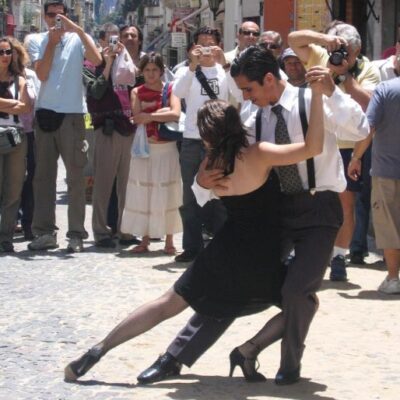
Tango Parallel
Explored from the mutual union of oneness, Parallel Tango is tricky to stabilise without it collapsing to a mutually choreographed move. That is, to be purely improvised out of the movement of bodies, the feelings of the dancers, and the music, on this dancefloor on this day. To maintain a unity with such a wide orbit of movement and individual agency... is challenging. Let's try.
£300
Tango Low
The Low Tango is for people who have co-ordination and confidence and probably some kind of training in sports or dance. The posture, contract of engagement, and speed of music, are all more demanding.
£300
Tango High
The High Tango and the Low Tango are similar in that they enable a complex dynamic which involves both partners as a single unit. It takes two to tango. The objective of the lesson is to get a taste of this. And once this is tasted, you simply enjoy going to social dances attempting to rediscover this taste. It is not a taste one can have alone. It is not practiced alone. It does not consist of specific named moves, eg 'otchos' etc. It is about achieving union with another person.
£90
Algebra 101
Three processes to be done simultaneously. No more. No less. You do these three processes simultaneously, and you are doing algebra. Enough to enjoy doing it. Enough to get a pass at GCSE.
£90